


All throughout the Universe, different types of signals propagate. Some of them, like sound waves, require a medium to travel through: the waves are fundamentally disturbances in a medium of particles, and in the absence of those particles, an initial “disturbance” has nowhere to go. Others, like light or gravitational waves, are perfectly content to traverse the vacuum of space, seemingly defying the need for a medium altogether. Irrespective of how they do it, all of these signals can be detected from the effects they have on all the matter and energy that they interact with: both along their journey through space all the way up until their eventual arrival at their final destination.
But is it truly possible for waves to travel through the vacuum of space itself, without any need for a “medium” to propagate through at all? What would that even mean for the nature of space itself?
For some of us, this is a very counterintuitive notion, as the notion of things existing within and moving through some form of empty nothingness just doesn’t make any sense. But plenty of things in physics don’t conform to our everyday intuitions, as it isn’t up to humans to tell nature what does and doesn’t make sense. Instead, all we can do is ask the Universe questions about itself through experiment, observation, and measurement, and follow nature’s answers to the best conclusions we can draw. Although there’s no way to disprove the aether’s (or anything else that’s fundamentally unobservable) existence, we can certainly look at the evidence and allow it to take us wherever it will.

Back in the earliest days of science — before Newton, going back hundreds or even thousands of years — we only had large-scale, macroscopic, directly observable-with-our-senses phenomena to investigate. And that phenomena included waves of many different types. The waves we observed came in many varieties, including:
- the ripples that wind caused in clothes on a clothesline or on a ship’s sails,
- water waves propagating across the surface of the sea, ocean, or lake,
- the waves that propagated through the ground during an earthquake,
- the waves that emerged along a tight string that was plucked, struck, or otherwise driven to oscillations,
- or even sound waves, whose effects could be felt differently in air, water, or through the solid ground.
These waves may seem remarkably different: they occur in and/or through different media, they propagate at different speeds, and they lead to vastly different effects, some of which are completely benign and others of which can be profound or even catastrophic.
The aforementioned waves also have much in common with one another. In the case of all of these waves, matter is involved. That matter provides a medium for these waves to travel through, and as the medium either compresses-and-rarifies in the direction of propagation (a longitudinal wave) or oscillates perpendicular to the direction of propagation (a transverse wave), the signal is transported from one location to another.
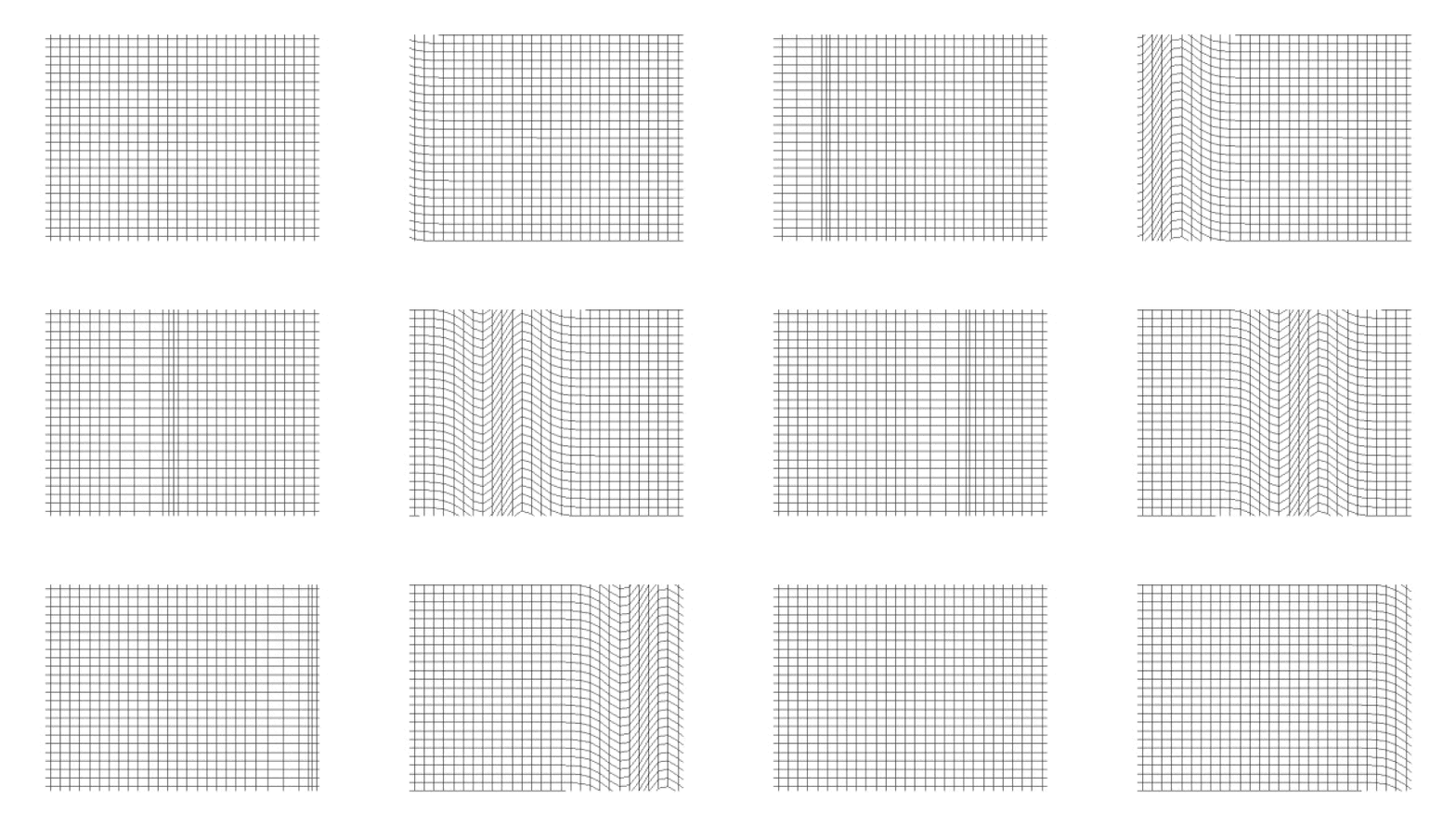
Those two classes of waves are known as traveling waves: they propagate through a medium in a particular direction, moving away from the source that generated them until they’re inevitably detected by an observer who’s located a specific distance away.

But those two types of waves, longitudinal and transverse, aren’t exhaustive; there are other types of waves that can, and indeed do, exist. As we began to investigate waves more carefully, a third type began to emerge. In addition to longitudinal and transverse waves, a type of wave where each of the particles involved underwent motion in what appeared to be a uniformly circular path — a surface wave — was discovered. The rippling characteristics of water, which were previously thought to be either longitudinal or transverse waves exclusively, were shown to also contain this surface wave component.
All three of these types of waves, longitudinal, transverse, and surface waves, are examples of mechanical waves, which is where some type of energy is transported from one location to another through a material, matter-based medium. A wave that travels through a spring, a slinky, water, the Earth, a string, or even the air, all require an impetus for creating some initial displacement from equilibrium: a source of the wave’s origin. From there, the wave then carries that energy through a medium toward its destination.
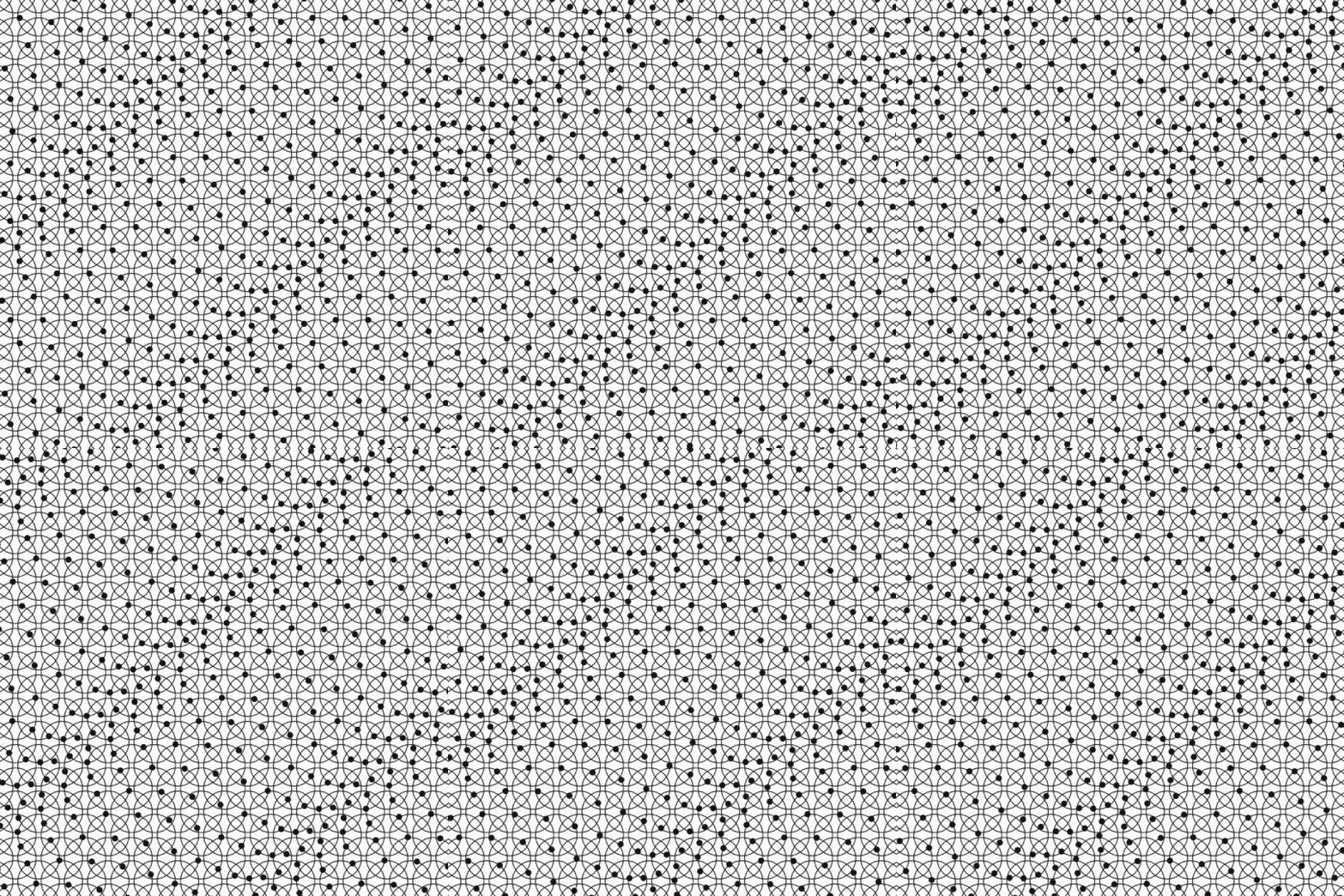
These three types of waves represented what we thought would be every possible option. You have some sort of medium for the wave to travel through, and whatever the medium was made out of would respond in one (or more) of three possible ways to enable the existence of wave-like phenomena. That picture has been with us since ancient times: long before the development of modern physics.
It makes sense, then, that as we discovered new types of waves, we’d assume they had similar properties to the classes of waves we already knew about. Even before Newton, the aether was the name given to the void of space, where the planets and other celestial objects resided. Tycho Brahe’s famous 1588 work, De Mundi Aetherei Recentioribus Phaenomenis, literally translates as “On Recent Phenomena in the Aethereal World.”
The aether, it was assumed, was the medium inherent to space that all objects, from comets to planets to stars, traveled through. If those objects were visible to us, because they emitted light, then the light must travel through that same medium as well. Whether light was a wave or a particle-like entity (then called a corpuscle), though, was a point of contention for many centuries. Newton claimed it was a corpuscle, while Christiaan Huygens, his contemporary, claimed it was a wave. The issue wasn’t decided until the 19th century, where experiments with light unambiguously revealed its wave-like nature. (With modern quantum physics, we now know it behaves like a particle also, but its wave-like nature cannot be denied.)
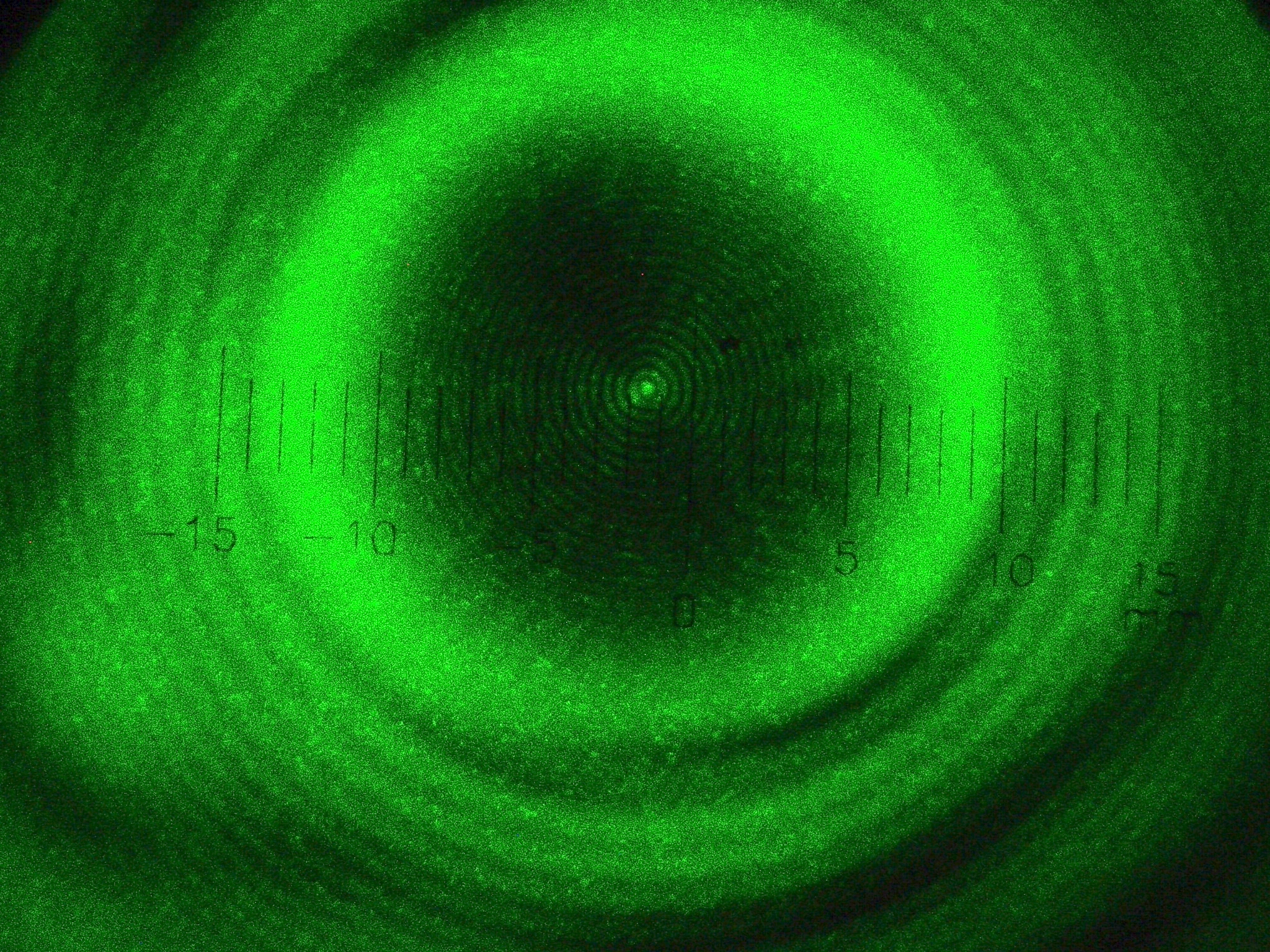
This was further borne out as we began to understand the nature of electricity and magnetism, which we began to do in the 18th and 19th centuries.
We learned how to generate “beams” of charged particles by developing what was first called a cold cathode in a vacuum tube: the predecessor of an electron gun or a cathode ray tube. Experiments that accelerated charged particles (normally by applying a voltage and/or an electric field to them) not only showed that they were affected by magnetic fields, but that when you bent a charged particle with a magnetic field, it radiated light. Theoretical developments (especially by Maxwell) showed that light itself was an electromagnetic wave that propagated at a finite, large, but calculable velocity. That velocity, today, is known as c: the speed of light in a vacuum.
If light was an electromagnetic wave, and all waves required a medium to travel through (which was our understanding at the time), then — as all the heavenly bodies traveled through the medium of space — surely that medium itself, the aether, was the medium that light traveled through. In other words, the existence of the aether was presumed from the start, as it had been for centuries; it was never expected that its existence would need to be “proven” or established.
The biggest question about it, then, was to determine what properties the aether itself possessed.
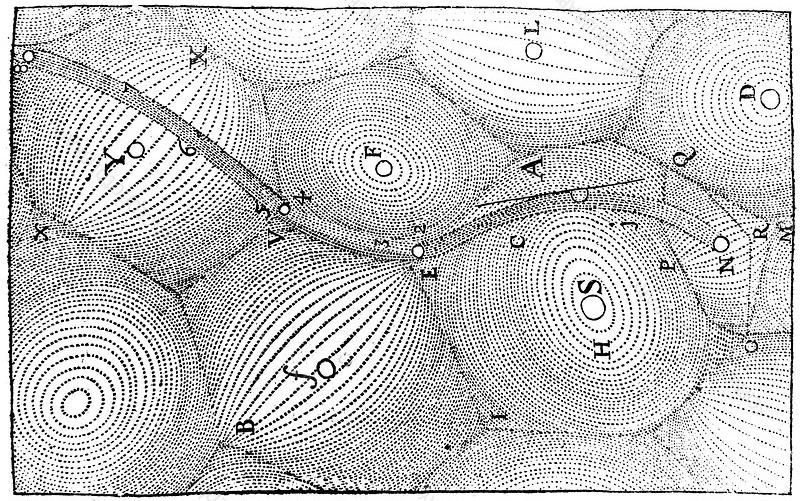
One of the most important points about what the aether couldn’t be was figured out by Maxwell himself, who was the first to derive the electromagnetic nature of light waves. In an 1874 letter to Lewis Campbell, he wrote:
It may also be worth knowing that the aether cannot be molecular. If it were, it would be a gas, and a pint of it would have the same properties as regards heat, etc., as a pint of air, except that it would not be so heavy.
Maxwell recognized that the aether could have no thermodynamic properties: it cannot be composed of particles that generated pressure, carried energy, or existed at a non-zero temperature.
In other words, whatever the aether was — or more accurately, whatever it was that electromagnetic waves propagated through — it could not have many of the traditional properties that other, matter-based media possessed. It could not be composed of individual particles. It could not contain heat. It could not even serve as a conduit for the transfer of energy through it: it could not conduct. In fact, just about the only thing left that the aether was allowed to do was serve as a background medium for things to travel through. Even that was sketchy; there were things that were known to travel but didn’t otherwise seem to require a medium to actually travel through, like light and gravity. The aether’s existence, even all the way back in the 1870s, was an assumption that lacked any direct supporting evidence.
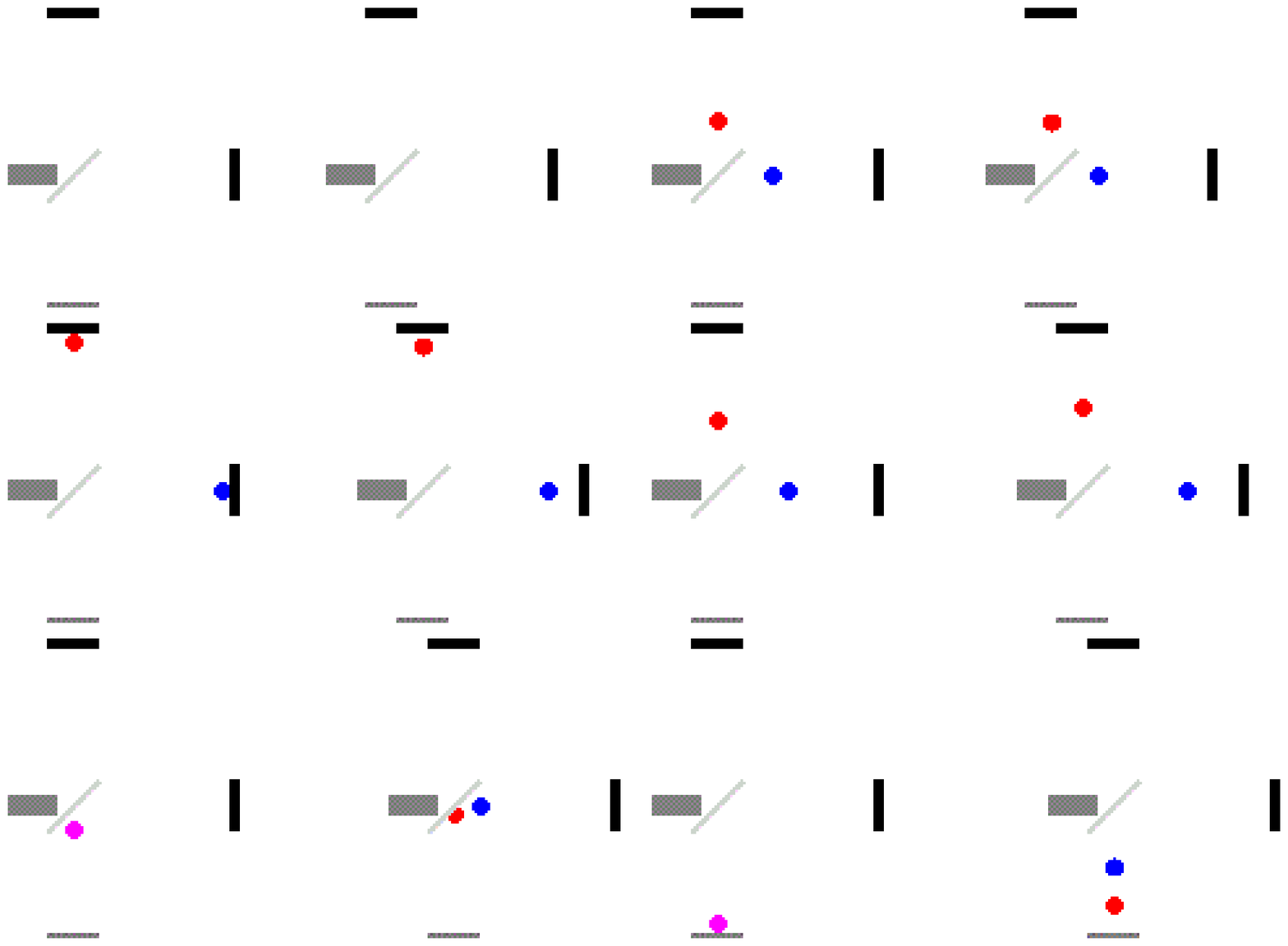
All of this led to the most important experiment that would ever be designed in an attempt to directly detect the effects of the aether: the Michelson-Morley experiment. If aether really served as a medium for light to travel through, then the Earth must be passing through (or moving through) the aether as it both rotated on its axis and revolved around the Sun. We only rotate on our axis at around 0.5 km/s and revolve around the Sun at a speed of around 30 km/s, and those numbers are tiny when compared with the speed at which light travels: more like 300,000 km/s. Nevertheless, our orbital speed still represents a substantial fraction (about 0.01%) of the speed of light, meaning that if we can concoct a way to measure 0.01% differences in the speed at which light travels:
- with Earth’s motion around the Sun,
- against Earth’s motion around the Sun,
- or transverse to Earth’s motion around the Sun,
then we could, in principle, detect the effects of the aether directly.
The idea is this: a sensitive enough interferometer, if light were a wave traveling through this medium, should detect a shift in the light’s interference pattern dependent on the angle the interferometer made with our direction of motion. Michelson alone tried to measure this effect in 1881, but his results were inconclusive, and required greater sensitivity than he was able to achieve. 6 years later, with Morley, they reached sensitivities that were just 1/40th the magnitude of the expected signal: a factor of improvement of more than 10 over Michelson’s original design.
Their experiment, however, didn’t detect the expected effects of the aether at all. Instead, it yielded a null result; no evidence for the aether’s existence had appeared.
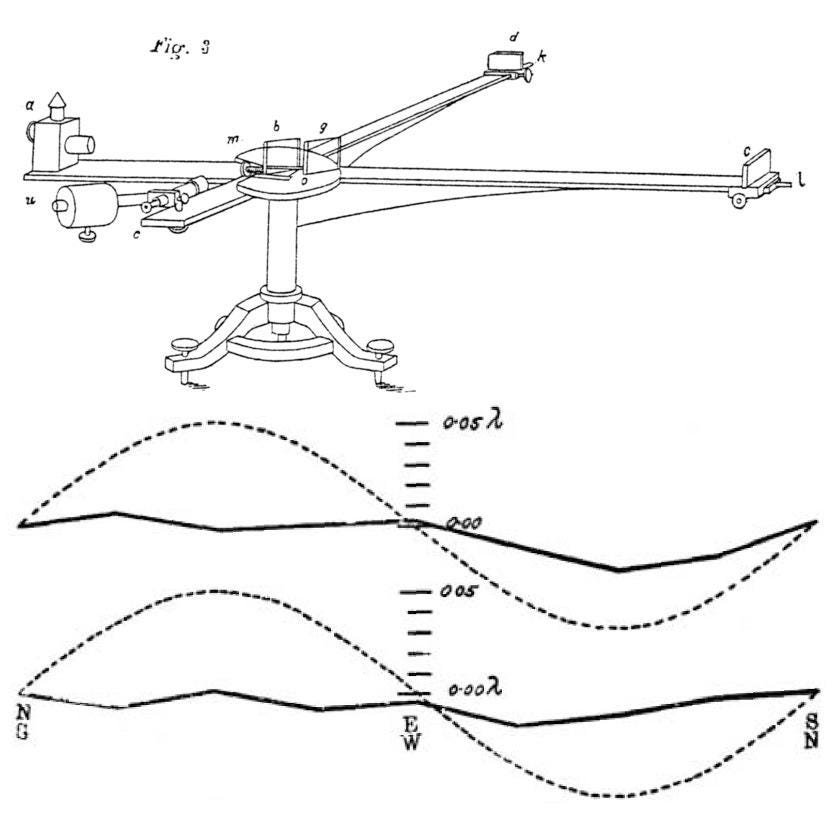
Aether enthusiasts contorted themselves in knots attempting to explain this null result while still saving the notion of the aether itself.
- Perhaps the aether did exist, but it could never be construed as being in motion by an observer on the Earth, because the aether itself was being dragged by objects traveling through space, such as the Earth, explaining why a null result was obtained.
- Perhaps the aether did exist and it was truly stationary and motionless, but as objects moved through it, they experienced the phenomena of length contraction and time dilation, which would cancel out the expected shifts and lead to a null result.
- And maybe, just possibly, the same aether that light traveled through, whatever it was, allowed for the propagation of Newton’s gravitational force as well, which could counteract the expected shifts in an equal-and-opposite fashion.
All of these possibilities, despite their arbitrary constants and parameters, were seriously considered for several years from 1887-1905: right up until Einstein’s special relativity came along. Once the realization came about that the laws of physics should be, and in fact were, the same for all observers in all inertial frames of reference, the idea of an “absolute frame of reference,” which the aether would have represented, was no longer necessary or even tenable.

What all of this means is that the laws of physics don’t require the existence of an aether. If you do posit an aether, you have to make extraordinary modifications to it to prevent its effects from showing up in any observation or experimental design you can concoct. Similarly, if you reject the notion of an aether, the laws of physics work just fine without one.
Today, with our modern understanding of not just special relativity but also general relativity — which incorporates gravitation — we recognize that both electromagnetic waves and gravitational waves don’t require any sort of medium to travel through at all; it’s possible that, in a flowery analogy, the fabric of space is a Cheshire Cat. The vacuum of space, devoid of any material entity, is enough to account for the propagation of objects and gravitation and electromagnetic signals all on its own.
This doesn’t mean, however, that we’ve actually disproven the existence of the aether. All we’ve proven, and indeed all we’re capable of proving, is that if there is an aether, it has no properties that are detectable by any experiment we’re capable of performing. It doesn’t affect the motion of light or gravitational waves through it, not under any physical circumstances, which is equivalent to stating that everything we observe is consistent with its non-existence.

If something has no observable, measurable effects on our Universe in any way, shape, or form, even in principle, we have no choice but to consider that “thing” to be physically non-existent. But we still have to be careful: the fact that there’s nothing pointing to the existence of the aether doesn’t mean we fully understand what empty space, or the quantum vacuum, actually is. In fact, there are a whole slew of unanswered, open questions about exactly the topic of what “empty space really is” that plague the field today.
Why does empty space still have a non-zero amount of energy — dark energy, or a cosmological constant — intrinsic to it? If space is discrete at some level, does that imply a preferred frame of reference, where that discrete “size,” presumed to be the Planck scale, is maximized under the rules of relativity? Can light or gravitational waves exist without having space to travel through, and does that mean there really is some type of propagation medium, after all?
As Carl Sagan famously said, “Absence of evidence is not evidence of absence.” We have no proof that the aether exists, but can never prove the negative: that no aether exists. All we can demonstrate, and have demonstrated, is that if the aether exists, it has no properties that affect the matter, radiation, and other signals that we actually do observe. The burden of proof isn’t on those looking to deny the aether’s existence: it’s on those who favor the aether. Until one can provide direct observational or experimental evidence that it truly is real, we’ll have no choice but to continue to confine it to the realm of mere speculation alone.
This article was first published in May of 2023. It was updated in May of 2026.

The Energy Transition


